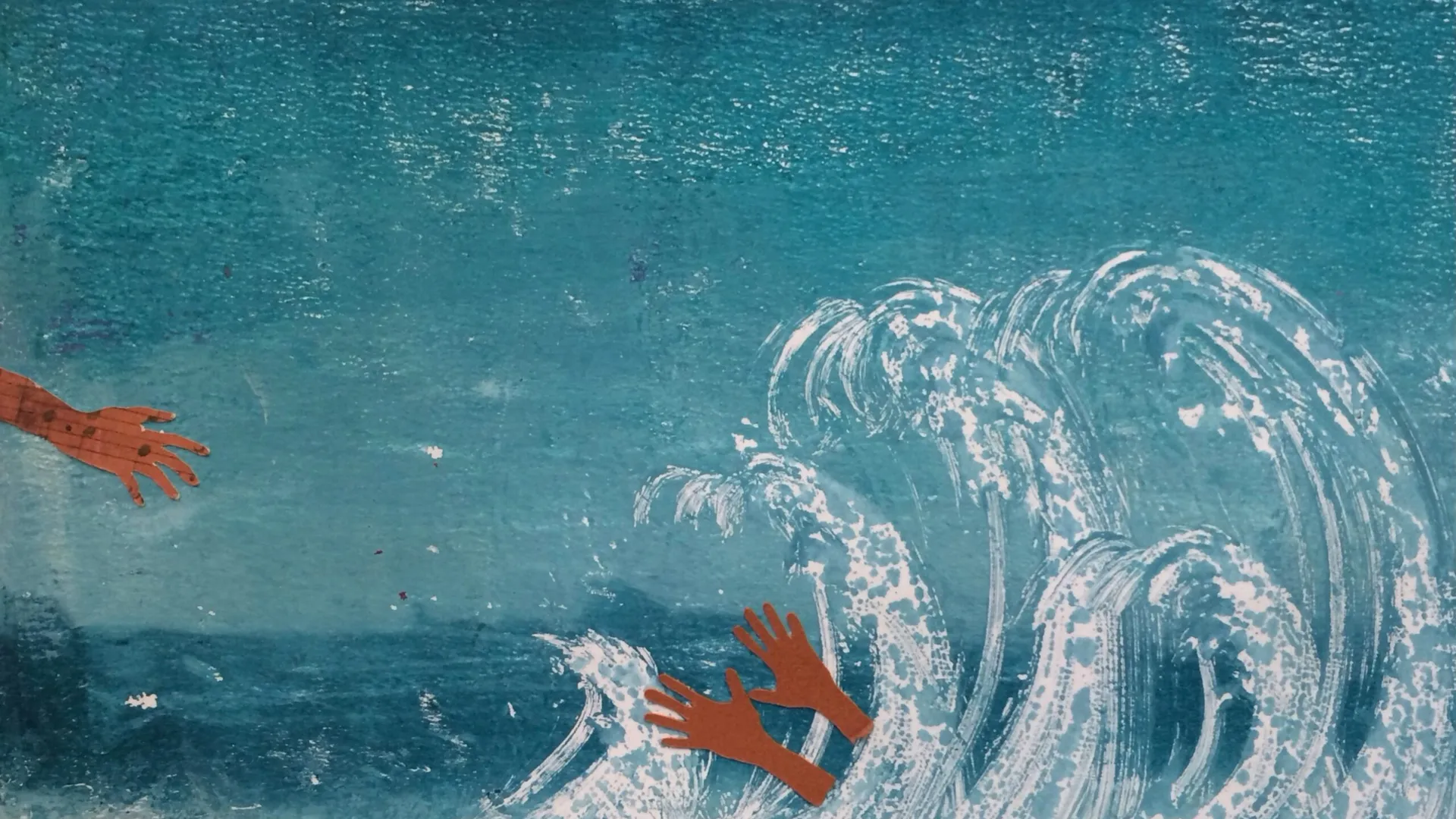
You Can Do Nothing So God Does Everything
Introduction: The Architecture of Complete Inability
The fundamental paradox of the human condition is the persistent belief that a finite, fallen creature can execute its own cosmic rescue. Religion frequently frames salvation as a collaborative venture—a transactional ladder where human effort climbs to meet divine favor.
However, rigorous logical analysis and structural Biblical theology both demand a radically different framework: Because humanity can do absolutely nothing to save itself, God must do everything.
If salvation requires even a single fraction of human initiative, the system collapses into logical impossibility, systemic failure, and eternal despair. The following five-part progression outlines the absolute necessity of monergism—the theological reality that God alone effects our rescue.
I. The Premise of Total Incapacity
“There is nothing you can do to be saved.”
To understand why human effort is excluded from salvation, one must first recognize the sheer depth of the human predicament. Scripture does not describe humanity as spiritually injured, drowning, or merely lacking a moral education. It describes humanity as structurally incapacitated.
- The Blueprint of Spiritual Death: Ephesians 2:1 states plainly that humanity is “dead in trespasses and sins.” A corpse cannot cooperate with a physician. It possesses no latent energy, no spark of willpower, and no capacity to choose life.
- The Depravity of the Will: In Romans 3:10–11, Paul establishes the universal baseline: “There is none righteous, no, not one; there is none who understands; there is none who seeks after God.”
If no one naturally seeks God, then the initial impulse for salvation cannot originate within the human heart. If the starting line requires human movement, the race can never begin. Therefore, the capacity for self-salvation is exactly zero.
II. The Illusion of the Fractional Contribution
“Therefore, there is nothing you have to do to be saved.”
Many theological systems attempt to soften the blow of total human inability by suggesting that salvation is a joint venture. They argue that God provides the ocean of grace, the sacrifice, and the opportunity, but man must supply a microscopic spark of compliance—perhaps just a single, uncoerced decision to “accept” or “cooperate” with that grace.
Let us assume this human component is a mere 0.000001% of the total equation, leaving God to perform the remaining 99.999999%. While this is often framed as an expression of extreme grace, it is actually a mathematical and logical death sentence.
Logically and structurally, if even 0.000001% of your salvation depends on your effort, then your salvation is 100% based on your effort.
The Leverage of the Smallest Variable
In any equation where one variable is a flawless, infinite constant and the other variable is a fragile, unpredictable unit, the entire weight of the final outcome shifts to the unstable unit.
- The Divine Constant: God’s part of the deal is a fixed reality. He perfectly performs His decree, perfectly offers His Son, and perfectly maintains His holiness. His 99.999999% is never in doubt; it is a flawless, guaranteed spiritual constant.
- The Human Variable: Because God’s side of the ledger is guaranteed, the entire weight of eternity balances precariously on your 0.000001%. If you perform your microscopic fraction, the system succeeds. If you fail to perform your fraction, the system collapses.
Therefore, God is not the deciding factor in this paradigm—you are. The ultimate cause of your salvation would not be the massive ocean of divine grace, but the tiny bucket of human willpower that decided to scoop it up. This strips God of His position as the ultimate Savior and transforms Him into a mere spectator waiting on human permission.
By definition, true grace (charis) is unmerited favor. As Romans 11:6 argues: “And if by grace, then it is no longer of works; otherwise grace is no longer grace.” If there is a transactional “have-to” placed upon you—even a fractional one—it ceases to be a rescue and becomes an employment contract where your effort determines the final result.
III. The Paradox of the Impossible Command
“Because anything you would have to do would be something you could not do.”
The moment salvation becomes dependent on even a fraction of human effort, it is instantly and utterly doomed.
Consider the mechanisms of salvation often proposed by human tradition: generating perfect faith, mustering sincere repentance, or maintaining moral purity. Under scrutiny, every single one of these actions, if left to raw human power, is an impossibility for a broken nature.
- A Corrupt Tree Cannot Bear Good Fruit: Jesus states this explicitly in Matthew 7:18. An unregenerate heart cannot produce a holy action. Even our highest righteous deeds are described as “filthy rags” (Isaiah 64:6) because they are contaminated by self-interest and a lack of perfect love for God.
- The Inability to Submit: Romans 8:7–8 cuts to the core of human psychology: “The carnal mind is enmity against God; for it is not subject to the law of God, nor indeed can be. So then, those who are in the flesh cannot please God.”
If a person must please God to be saved, but cannot please God while in their natural state, then any demand placed upon them is a demand to perform the impossible.
As established in the baseline premise, human spiritual capacity is not merely low; it is zero. A corpse cannot run a marathon, but it also cannot wiggle its pinky finger. Dead is dead. If the entrance fee to heaven is a trillion dollars or a single penny, a completely bankrupt beggar is equally locked out by both demands. If God requires even the slightest flicker of pure, unblemished, self-generated human initiative to trigger His grace, He has still conditioned eternity on something a fallen nature is physically and spiritually incapable of producing.
IV. The Alignment of Duty and Ability
“And if there’s nothing you can do, there isn’t something you must do. Otherwise, God has put you in a literally lost-forever circumstance.”
If God were to condition eternity on a task that is fundamentally impossible for a dead soul to perform, the universe would be an arena of cosmic cruelty. It would mean God created a system where the deck was stacked so completely that humanity was locked into a “literally lost-forever” loop from day one.
But God’s justice and character do not operate on the illusion of human self-determination. Instead, God acknowledges our bankruptcy and shifts the entire weight of obligation onto the Mediator.
- The Character of God: God is fundamentally just and merciful. He does not mock a paralyzed man by demanding he stand up to receive medicine.
- The Purpose of the Impossible Law: Why, then, did God give a Law that commands perfection? Galatians 3:24 explains that the Law was never meant to be a checklist for self-rescue; it was a “tutor to bring us to Christ.” The purpose of the command is to break our pride, to prove to us that we cannot do it, and to force us to look outside ourselves for a Savior.
To preserve the structural integrity of both human bankruptcy and divine glory, the human contribution cannot merely be minimized; it must be completely obliterated. It cannot be a tiny fraction; it must be absolute zero (0%). Only when the human requirement is zero does salvation cease to be a gamble based on human performance and become an absolute certainty based on sovereign execution.
V. Conclusion: The Sovereign Answer
“So… what must you do to be saved?”
When the Philippian jailer asked this exact question in Acts 16:30, the answer he received was not a list of structural improvements, cooperative strategies, or personal efforts. He was told: “Believe on the Lord Jesus Christ, and you will be saved.”
But how does one believe if faith itself is an act we are too dead to produce?
The ultimate resolution of the treatise is that even the very belief required is a gift generated entirely by God. Ephesians 2:8–9 solidifies this monergistic reality:
“For by grace you have been saved through faith, and that not of yourselves; it is the gift of God, not of works, lest anyone should boast.”
The Final Verdict
What must you do to be saved? You must do nothing.
The work is entirely passive on the part of the rescued. You do not swim to the life raft; you are pulled from the bottom of the ocean while unconscious.
- God provides the substitute: Jesus Christ fulfills the perfect life you could not live and dies the death you could not survive.
- God provides the spark: The Holy Spirit regenerates the dead heart, granting the very faith and repentance you could not muster on your own.
Salvation is not a joint venture. From inception to completion, it is a unilateral declaration of divine rescue. Because you can do nothing, God has done everything.
VI. The Deconstruction of the “Believer’s” Pride
Many who comfortably rest in their status as “the saved” do so under a subtle delusion. They readily admit they were saved by grace through faith, but if pushed, they will claim their salvation hinges on the fact that they believed. They look at the unsaved and conclude, “The difference between us is that I chose to accept Christ, and they chose to reject Him.”
But this returns us directly to the 0.000001% trap.
If the dividing line between heaven and hell is your self-generated decision to believe, then you have successfully contributed the winning variable. You have saved yourself by your superior wisdom, your softer heart, or your spiritual discernment. Faith, in this framework, becomes a work—a psychological performance that earns divine rescue.
To truly understand sovereign grace, a person must have this false assurance reasoned out of them.
- The Origin of Willpower: John 1:12–13 explicitly obliterates the human will as the catalyst for spiritual rebirth: “But as many as received Him, to them He gave the right to become children of God, to those who believe in His name: who were born, not of blood, nor of the will of the flesh, nor of the will of man, but of God.”
- The Cause of Belief: You did not believe because you willed it. You willed it because God first altered your nature so that you could will it. As Philippians 2:13 notes, “It is God who works in you both to will and to do for His good pleasure.”
If you at some point professed belief in Christ, it was not an act of your autonomous volition. It was the direct, irresistible result of God willing it upon a dead heart. You were completely passive in your resurrection.
VII. The Multiplier Effect of Unilateral Will
Once it is established that human belief is entirely a product of the divine will, the theological landscape undergoes a massive, seismic shift.
If your faith is the result of God overriding your spiritual corpse and breathing life into it, then human resistance is not an insurmountable obstacle to God. Your stubbornness, your sin, and your deadness did not stop Him from causing you to believe.
Logically, this leads to an undeniable premise: If God can sovereignly will you to profess belief in Christ, He can sovereignly will anyone to profess belief in Christ.
No heart is too hard, no mind is too corrupted, and no soul is too far gone. If human permission is not required for God to grant faith, then salvation is entirely a matter of divine capability and divine intent. The human variable has been removed from the equation worldwide.
VIII. The Final Convergence: Almighty Love
This brings us to the ultimate question of divine intent: If God can will anyone to believe, who will He will to believe?
If God is the definition of infinite, unconditional Love, the answer is mathematically absolute: He will will everyone.
[ Sovereign Power: God can cause ANYONE to believe. ]
                          +
[ Infinite Character: God is Love, desiring the restoration of all. ]
                          =
[ Sovereign Execution: God will inevitably cause EVERYONE to believe. ]
The Inescapable Scope of Love
We are told in 1 Timothy 2:4 that God “desires all men to be saved and to come to the knowledge of the truth.” In a cooperative system, that desire is thwarted by human refusal. But in a completely monergistic system—where human effort is 0% and God’s execution is 100%—a divine desire is a guaranteed cosmic reality. What God desires, His sovereign power executes.
True, infinite Love does not stop at a partial rescue. A love that has the power to save a dead enemy without their permission, but chooses to leave the majority of humanity in a “lost-forever circumstance,” is a contradiction in terms. That would make salvation arbitrary, not loving.
But if Love is omnipotent, and human choice is not the gatekeeper, then the cross of Christ is not a tragic gamble where God hopes for takers. It is an unmitigated triumph.
Just as God unilaterally opened your blind eyes to make you see the beauty of Christ, He has the absolute power—and, by virtue of His loving nature, the absolute certainty—to eventually open every eye.
The Ultimate Verdict of the Treatise
If you are saved today, you are a living proof of a forced entry. God did not wait for your consent; He conquered your deadness with life.
And because He did it for you, He can, and will, do it for all. The end result of a system where man does nothing and God does everything is not a restricted heaven for a select few who stumbled into the right choice. It is the total, ultimate, and glorious reclamation of everything He made.
Because you could do nothing, God did everything—for everyone.
IX. The Myth of Post-Salvation Maintenance
“Are you so foolish? Having begun in the Spirit, are you now being made perfect by the flesh?” — Galatians 3:3
The final illusion to be shattered is the idea that once you are placed into a saved state by no effort of your own, the responsibility shifts to you to keep yourself there. This framework suggests that while God hooks you up to the life-support machine of grace, you must possess the willpower to keep from pulling the plug.
This is a structural contradiction. If you had exactly zero (0%) ability to breathe life into your own spiritual corpse, you possess exactly zero (0%) ability to keep that resurrected life from dying on its own.
You have no efficacious effort to keep yourself in a saved state.
Whether or not you remain in that state is completely independent of your ongoing belief, your moral failures, your wandering thoughts, or your fluctuating actions. It rests solely, securely, and unchangeably upon the absolute will of God.
The Theological Lock
If a human being could lose their salvation through sin, doubt, or an act of the will, then salvation would be a fragile, terrifying gamble. It would mean a creature’s temporal weakness could override the Creator’s eternal decree.
Scripture rejects this vulnerability by placing the entire burden of preservation on the Savior, not the saved:
- The Inviolable Grip: In John 10:28–29, Jesus states: “And I give them eternal life, and they shall never perish; neither shall anyone snatch them out of My hand. My Father, who has given them to Me, is greater than all; and no one is able to snatch them out of My Father’s hand.” Notice that this includes you. You cannot even snatch yourself out of His hand.
- The Guarantee of Completion: Philippians 1:6 shifts the operational weight entirely to God: “Being confident of this very thing, that He who has begun a good work in you will complete it until the day of Jesus Christ.” God is not an contractor who lays a foundation and leaves you to finish the framing. He is the Architect, the Builder, and the Finisher.
- The Shield of Power: First Peter 1:5 states that the redeemed are “kept by the power of God through faith for salvation.” We are not kept by our own grip on God; we are kept by His grip on us.
The Absolute Absence of Requirement
If you could lose your salvation through a shift in your beliefs or actions, then Christ’s declaration on the cross—“It is finished” (John 19:30)—was premature. It would mean the cross was merely a down payment, and you had to finance the rest through a lifetime of faithful performance.
But a perfect rescue operation leaves no room for human failure to compromise the outcome.
[ Entrance into Salvation: 0% Human Effort / 100% Divine Execution ]
                               +
[ Maintenance of Salvation: 0% Human Effort / 100% Divine Preservation ]
                               =
[ The Absolute Reality: Free from the burden of self-preservation. ]
All in all, there is no human effort required to be saved, and there is no human effort required to remain saved.
If you are in Christ, your security is not based on the intensity of your focus, the purity of your life, or the consistency of your theology. It is based entirely on the immutable, unshakeable promise of a Sovereign God who does not lose what He captures, does not abandon what He loves, and does not fail in what He wills.
From start to finish, from the first spark of faith to the ultimate restoration of all creation, humanity contributes nothing but the need for rescue. God does everything.
X. The Pastoral Reality: Living in the Wake of Sovereign Love
A New Perspective on God: From Judge to Absolute Sanctuary
For most of human history, religion has conditioned people to view God as a volatile monarch whose favor must be constantly managed through proper belief, flawless behavior, and endless self-monitoring.
But when you realize that your entry into grace, your belief, and your ultimate preservation are entirely executed by Him, the fear evaporates. God ceases to be a judge waiting for you to slip up and becomes an unshakeable sanctuary. You see Him for who He truly is: an omnipotent, loving Father who doesn’t wait for permission to rescue His children. This is the only reasonable and logical image of a “God of Love”—a God whose affection is not a transaction to be earned, but an inescapable reality to be experienced.
A New Perspective on Life: Freedom from the Burden of Security
When the requirement for self-preservation drops to absolute zero (0%), the frantic, exhausting anxiety of religious performance dies with it. You no longer have to live life looking over your shoulder, wondering if a wandering thought, a moment of doubt, or a moral failure has stripped away your eternity.
This newfound knowledge—delivered to you at this exact time and place—grafts you into a deep, supernatural rest. Life is no longer a high-stakes test you are guaranteed to fail; it becomes a canvas on which you get to enjoy the reality of being seamlessly, perfectly kept by a power greater than your own.
A New Perspective on Love: The Source of Ridiculous Grace
Perhaps the most explosive transformation happens in how you view and treat the people around you.
When you believe that your salvation is even fractionally due to your own right choices or superior belief, you naturally look down on those who haven’t made those choices. It breeds a subtle, toxic elitism. But when you recognize that you were a completely incapable, undeserving spiritual corpse when God unilaterally breathed life into you, all self-righteousness is utterly obliterated.
You look at your family, your friends, your neighbors, and yes—even your bitterest enemies—and you realize: What God has done for me, He will inevitably do for them.
- Their current rebellion cannot stop Him.
- Their hardness of heart is no match for His sovereign will.
- Their blindness is just a temporary state before He opens their eyes.
This realization opens the floodgates for you to be ridiculously gracious and merciful to everyone around you. If God’s love is so overwhelmingly vast that it overrode your own deadness without asking permission, who are you to restrict that love from anyone else?
The Shout from the Mountaintops
This is the true meaning of the Gospel—the literal “Good News.” It is not an invitation to a difficult cooperative arrangement; it is a declaration of total victory.
Armed with this truth, you can shout it from the mountaintops without fear. Even if the world rejects the message, misunderstands it, or persecutes you for it, their hostility cannot diminish your peace. You can love them, forgive them, and extend boundless grace to them anyway—because you are merely reflecting the same fierce, relentless, unyielding love that God used to conquer you.